For over a decade, homeowners planning a primary bathroom remodel had one specific look in mind: the all-white, ultra-bright “clinical” suite. This guideline – which relied on stark white subway tile, glossy white vanity boxes, and cool gray floors – was once considered the absolute gold standard for a clean, modern bathroom.
But in 2026, as we head into the vibrant spring season, interior design priorities have drastically shifted.
Rather than building spaces that look like sterile showrooms, people planning renovations today are focusing on “organic warmth”—bringing natural textures, rich woods, and earthy elements indoors to create a grounding, resort-like sanctuary right in their own homes.
Why the All-White, Clinical Bathroom Is No Longer Enough
The classic, monochromatic white bathroom was developed when homeowners were obsessed with spaces looking perfectly sanitized and uniform.
But today’s homeowners want their bathrooms to feel entirely different:
- A warm, inviting retreat rather than a cold, stark room
- A space with unique character, not a carbon-copy showroom
- Forgiving surfaces that don’t show every single speck of dust or water spot
- A seamless connection to the natural world outside
In a home where the primary suite is meant to be a place of decompression and stress relief, surrounding yourself with cold, high-gloss, manufactured materials simply doesn’t create the relaxing environment most people are looking for anymore.
What’s Replacing the Sterile Bathroom?
Instead of focusing only on high-contrast, manufactured finishes, bathrooms are now being layered with materials pulled directly from nature.
Furniture-Style Wood Vanities
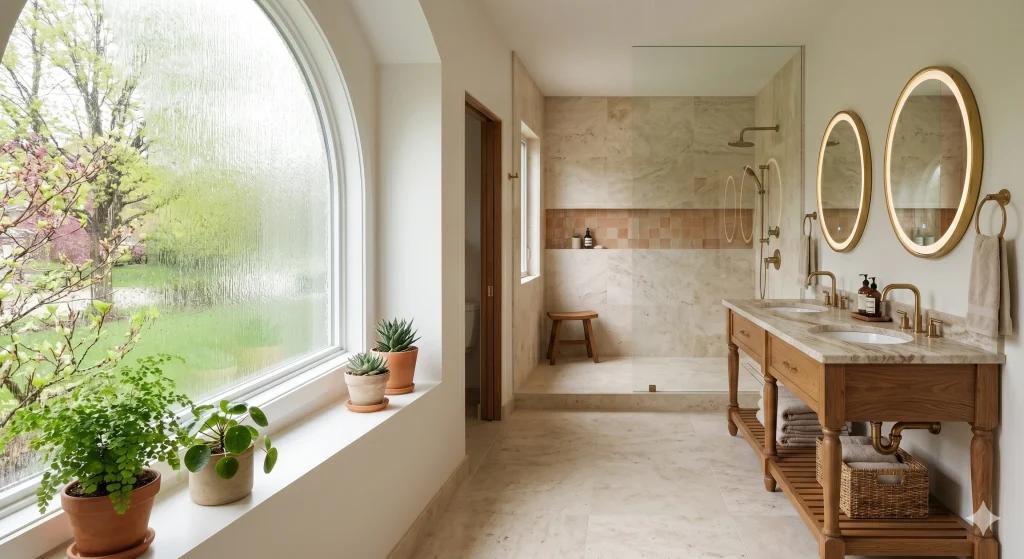
Say goodbye to the standard, wall-to-wall painted vanity box. The biggest trend of 2026 is the furniture-style vanity crafted from rich, natural woods like white oak, warm walnut, or teak. Featuring visible wood grains, turned legs, or floating designs, these pieces look like high-end living room furniture brought into the washroom.
Earthy, Textured Stones
Perfectly smooth, stark-white quartz is being swapped out for materials with movement and depth. Think creamy travertine floors, richly veined quartzite countertops, and zellige wall tiles that feature subtle, handmade imperfections and earthy tones.
Living Metal Finishes
Instead of polished chrome that requires constant wiping to stay spotless, designers are leaning heavily into “living finishes” like unlacquered brass or brushed bronze. These metals naturally patina and change color over time, adding incredible warmth and a sense of history to the space.
Biophilic Design Elements
With the Wisconsin spring arriving, maximizing natural light is a top priority. Remodels are incorporating larger windows, privacy glass that lets the sunshine pour in, and built-in ledges specifically designed for moisture-loving bathroom plants.
Why Organic Design Works Better for Today’s Homes
Layering natural materials into your bathroom offers several practical and aesthetic advantages:
They Create Instant Stress Relief
Psychologically, humans are calmed by natural elements. Stepping onto a textured stone floor and looking at warm wood grain instantly feels more relaxing than standing in a stark, glossy white box.
They Age Gracefully
Natural materials are meant to show a little life. A slight patina on a brass faucet or the natural variation in a stone tile means the room won’t look “ruined” by standard, everyday use.
They Never Feel Dated
While specific tile patterns and paint colors go out of style every few years, high-quality natural wood and stone have been used in architecture for centuries. They are inherently timeless.
What This Means for Bathroom Remodels in Appleton
Many homes in the Fox Valley currently sit at two extremes: they either have the original, heavy orange-oak cabinets from the 1990s, or they have the flipped, stark-white-and-gray palettes from the 2010s.
When planning a 2026 bathroom renovation, it’s worth asking:
- Does the current space feel cold or uninviting?
- Could we swap our built-in cabinetry for a custom, furniture-style wood vanity?
- Would a warmer, cream-based stone make the room feel more relaxing than a stark white tile?
- How can we bring more natural sunlight into the footprint?
An organic-modern remodel can be completely customized. In some cases, it might mean doing a full gut-rehab to install travertine floors and a custom walnut double-vanity. In others, it might be as simple as changing the tile tones and swapping cool-toned fixtures for warm, living metals.
Is the White Bathroom Completely Outdated?
Not entirely.
White will always be a foundational color in bathroom design because it signifies cleanliness. The difference is that it is no longer the only color in the room.
In 2026, the most successful bathroom designs use soft, creamy whites as a canvas to let beautiful, natural woods and textured stones take center stage. The focus has shifted from “How bright can we make it?” to “How warm and inviting can this space feel?”
Planning a Bathroom Design That Works Long-Term
When remodeling a bathroom, the quality of the materials sets the tone for the entire home. While cheap, manufactured finishes might look okay on day one, they quickly show their age.
A well-planned, nature-inspired bathroom should:
- Introduce warmth and texture to the daily routine
- Utilize durable, high-quality materials that wear beautifully
- Feel deeply personal and unique to the home
- Add significant, long-term luxury value to the property
If you’re exploring bathroom remodeling options for your Appleton home this spring, stepping away from the sterile showroom look and bringing the beauty of nature indoors will leave you with a stunning, future-proof retreat.